
Maintenance Strategies for Plastic Processing Equipment
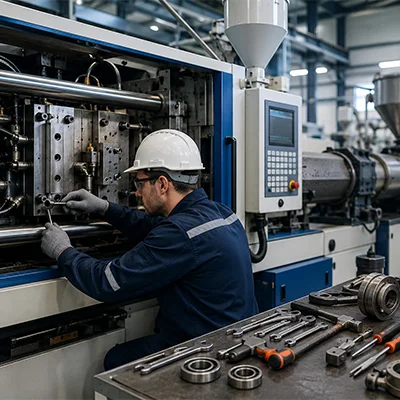
No one who has ever been employed in a plastics plant has ever encountered the rapid shutdown of a machine when it begins to have difficulties. Sometimes the issue is serious, like a gearbox failure. Other times, it starts with something small — unstable temperature readings, unusual vibration, oil leakage, or inconsistent cycle timing. Even minor issues can affect the entire production line if they are ignored for too long.
That is one reason manufacturers are giving more importance to Plastic Processing Equipment Maintenance today. Machines are expected to run longer, production targets continue to increase, and customers want consistent quality without delays. Under those conditions, equipment reliability becomes extremely important.
In many facilities, maintenance teams are no longer focused only on repairs after breakdowns happen. The approach has changed. Companies now want fewer shutdowns, better machine efficiency, and longer equipment life. As a result, maintenance planning has become part of day-to-day production strategy rather than just a support activity.
Why Maintenance Matters on the Production Floor
Plastic processing equipment works under continuous stress. Injection molding machines operate with high pressure and heat. Extrusion systems run for long hours without stopping. After a period, the components of a motor, such as screws, pumps, heaters, and cooling systems, wear out.
What makes maintenance difficult is that machine problems often build gradually. A bearing does not fail suddenly without warning. In most cases, there are early signs:
- Extra vibration
- Higher operating temperature
- Noise changes
- Oil contamination
- Slower response time
- Inconsistent output quality
When these signs are missed, production problems usually follow.
A production supervisor at a plastics plant once described maintenance this way: “Machines rarely stop without warning. The warning signs are there. The problem is that busy factories sometimes ignore them.”
That observation reflects what many manufacturers experience.
Good Plastics Manufacturing Equipment Care helps companies avoid situations where one mechanical issue disrupts an entire production schedule.
The Shift Away From Breakdown Maintenance
Years ago, some factories preferred running machines until failure occurred. The rationale was straightforward: if the machine is still in operation, then why halt production for maintenance?
But that approach created problems.
Unusual shutdowns are typically encountered while the plant is running. Emergency repairs are more expensive than planned servicing. Sometimes, when one component fails, it affects surrounding components, too, adding to repair time.
Due to this, there is a greater use of Preventive Maintenance for Plastic Machinery by manufacturers these days.
But preventive maintenance is not a cure-all for issues; it's only to help minimize chances for big equipment failure.
Here's a list of some typical activities that are generally included in a preventative maintenance program:
- Cleaning cooling systems
- Replacing filters
- Inspecting hydraulic hoses
- Checking heater bands
- Lubricating moving parts
- Monitoring electrical connections
- Inspecting motors and bearings
While it may appear simple, these tasks can be quite impactful in the long run.
Regular preventative maintenance schedules typically result in fewer interruptions in plant production than do reactive maintenance schedules.
Injection Molding Machines Require Close Monitoring
Injection molding machines require special attention of all the processing systems. The machines rely on pressure, temperature and timing during the molding process.
Little changes in the machines can impact the quality of products.
It is for this reason that Injection Molding Machine Maintenance is often on a consistent focus.
One of the areas that maintenance teams check regularly is hydraulic systems. The pressure instability and dirty hydraulic oil may cause cycle variability and machine inefficiency.
Technicians usually monitor:
- Oil condition
- Pressure stability
- Pump performance
- Seal wear
- Fluid contamination
- Hose leakage
Screw and barrel wear is another common concern. Over time, friction from processing materials gradually affects internal surfaces. As wear increases, material flow becomes less predictable.
Experienced operators often notice these changes before instruments detect them. They may see differences in melt consistency, cycle behavior, or product finish.
Mold condition also affects production more than many people realize. Poorly maintained molds can create repeated defects even when machine settings appear correct.
Simple cleaning and inspection routines help reduce these issues significantly.
While extrusion equipment has encountered many challenges, each is unique
Extrusion lines present their own maintenance problems, as they are typically operated for extended periods and are running continuously.
Extrusion systems remain operational throughout various shifts in many plants with low downtime.
Under those conditions, regular Plastic extrusion machine servicing becomes necessary to maintain stable operation.
Temperature control is especially important in extrusion processing.
When heaters or thermocouples stop working properly, manufacturers may begin seeing:
- Surface defects
- Thickness variation
- Flow instability
- Burn marks
- Material degradation
Maintenance crews therefore spend considerable time checking temperature zones and replacing weak components before they fail completely.
There is also a need to attend to drive systems and gearboxes. If unchecked, vibration, alignment problems and lubrication issues will slowly start affecting performance. Some plants now monitor gearbox vibration regularly because early detection prevents larger repairs later.
Lubrication Problems Still Cause Avoidable Damage
One maintenance area that still gets overlooked in some facilities is lubrication.
Industrial machinery lubrication problems persist as a cause of unnecessary problems with machinery, particularly in older plants where lubrication is not performed regularly.
Without proper lubrication:
- Bearings wear faster
- Friction increases
- Heat buildup becomes more severe
- Energy usage rises
- Equipment life shortens
Just as interesting, too much lubrication can be an issue too. Too many lubricants can result in increased pressures, dirt entrained or damage to seals.
That's why maintenance teams are more diligent in managing lubrication schedules and selecting the right-products.
To minimise manual error and ensure consistency, some manufacturers have come up with automatic lubrication systems.
Predictive Maintenance Is Becoming More Common
Many larger manufacturers are moving beyond scheduled maintenance alone. Interest in Predictive maintenance in manufacturing has increased steadily during the past few years.
The idea behind predictive maintenance is straightforward. Instead of servicing machines only at fixed intervals, manufacturers monitor actual equipment condition and respond when early warning signs appear.
This allows maintenance teams to focus attention where it is truly needed.
The growth of Predictive maintenance technologies has made this approach more practical.
The performance of a machine can be monitored continuously using modern monitoring systems, including sensors and software platforms that are connected to the machine.
Sensors Are Changing How Factories Monitor Equipment
In older facilities, maintenance decisions often depended heavily on operator experience. While experience still matters, manufacturers now use far more data than before.
Modern systems can monitor:
- Vibration patterns
- Temperature changes
- Oil condition
- Motor load
- Pressure variation
- Energy consumption
If readings move outside normal ranges, maintenance teams receive alerts before serious damage occurs.
Thus, for instance, vibration analysis can detect bearing problems early in their development before they cause a failure. Overheating electrical elements can be detected through the use of thermal imaging.
Oil analysis has also become more useful for large production facilities. The amount or presence of particles and contaminants in lubricants can often give early warning of internal wear.
These tools allow companies to plan repairs in an efficient manner rather than merely reacting to the breakdown.
Smart Maintenance Systems Are Expanding
As factories adopt more automation, Smart maintenance systems are becoming increasingly common.
Many plants no longer rely entirely on handwritten maintenance logs or spreadsheets. Rather, maintenance is monitored in centralized software that directly interfaces with equipment monitoring systems.
These systems assist manufacturers in the following ways:
- Schedule servicing
- Track repair history
- Monitor downtime
- Manage spare parts
- Analyze equipment performance
- Receive predictive alerts
The best thing is visibility. Production managers and maintenance teams can view equipment's status in real-time, rather than waiting for manual data to be entered.
The integration of the Smart Factory helps planning to become better
Maintenance is also becoming part of broader Smart factory integration projects.
With connected factories, machines, production systems, maintenance platforms share information automatically. This not only boosts the coordination of departments, but also enables manufacturers to better schedule maintenance.
For instance, servicing may be performed at less busy times of the production line, as opposed to during periods of heavy workload.
The factories also benefit from having a better understanding of which machines are having repeated downtime or using excessive energy.
This data is used to help prioritize equipment upgrade and maintenance investment.
Even with the right technology, minimizing downtime is still a people issue
While technology can help in maintaining the Plan, the focus of Equipment downtime reduction remains on workforce awareness and communication.
The operators typically are the first to pick up on the change in machine behavior. An unusual sound, vibration or smell might occur long before automated alarms go off.
It is also important that facilities allow operators to report small problems quickly, before becoming bigger problems.
Availability of spare parts is also significant and not something many companies consider. Replacement parts may be unavailable in time leading to prolonged downtime, particularly with older machines.
Many plants now maintain inventory for critical items such as:
- Bearings
- Heater bands
- Sensors
- Hydraulic seals
- Motors
- Filters
This will help to minimise repair waiting time.
Maintenance and Energy Efficiency
The other factor to why maintenance is now more important is energy cost.
When equipment is poorly maintained it will use more power than it needs to. Gradual reduction of efficiency occurs due to misalignment, friction, overheating or clogged cooling systems.
Maintenance also has a part to play in energy management, for manufacturers trying to keep operating costs in check.
Better machine condition generally leads to:
- Lower energy use
- Less material waste
- Improved process stability
- Reduced scrap generation
In some instances minor changes to the maintenance will yield significant savings on several production lines.
Final Thoughts
This is where most plastic manufacturers end up: if they want to manufacture their product in a consistent manner, it's important that they have a dependable set of equipment.
Good Plastic Processing Equipment Maintenance can keep the company from having to deal with unnecessary downtime, maintain consistency with product and extend the machine's lifetime.
From regular maintenance to advanced Predictive maintenance solutions, manufacturers are increasingly taking action to maintain their equipment.
Simultaneously, connected systems, digital monitoring, and Smart maintenance systems are revolutionizing the way factories are managing machine reliability.
Nevertheless, the fundamental concept is the same in both cases, even with the aid of technology. Small equipment problems can typically be solved much more cheaply at an early stage than when they become big issues.
 Media Pack Download
 Newsletters
 Industrial Events